

Preliminary Final Report on Oktoberfest 2026
Sunny, cheerful and peaceful – that is the conclusion for this year’s Oktoberfest. The fairground operators, landladies and landlords, and the security authorities were very satisfied and praised the relaxed, cheerful atmosphere. The Oktoberfest was overshadowed by the fatal accident involving an employee of the “Hangover” ride, which filled the Oktoberfest family with great consternation and sorrow.
2026 Financial Statements: Key Figures
- Guests: 7.4 million (2025: 6.5 million)
- Beer: About 6.7 million Maß of beer
- Food: The large tents report increased consumption compared to last year.
- Lost and Found: About 4,000 lost items
- Beer Mug Theft: 105,000 beer mugs collected
- Energy: 2.65 million kWh of electricity consumed
- Security: Police and Aicher report an increase in the number of incidents
- Trash: 92 metric tons disposed of
The most-attended Oktoberfest in history is coming to an end
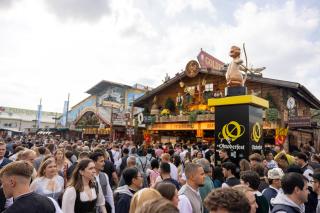
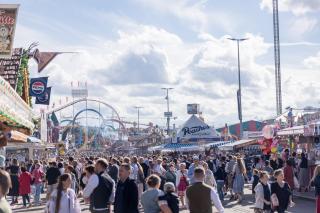
According to initial estimates by the festival management, around 7.4 million guests visited the Theresienwiese over the 16 days up to and including Sunday, 4 October (2025: 6.5 million), including 447,000 visitors to the Oide Wiesn (2025: 360,000). This makes the 2026 Oktoberfest the most visited in its history to date.
Visitor numbers rose particularly sharply on weekdays (Monday to Thursday inclusive: +18.5 per cent in the first week and +28.9 per cent in the second week). This shows that the City of Munich’s visitor-management campaign, “How to Wiesn”, which encourages guests to visit the Oktoberfest on weekdays, has been extremely successful. The late-summer weather also played a positive role.
Despite the high number of visitors, the new security concept and visitor management prevented any overcrowding on the Oktoberfest.
The revised entrance arrangements at the Oide Wiesn ensured smooth operations there despite a significant increase in guest numbers (+24.2 per cent).
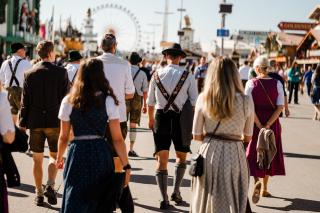
As in previous years, the festival audience was highly diverse: families with children, young people, senior citizens, regulars’ tables and groups of friends came to the Theresienwiese to stroll for a few hours, try out the rides, eat, drink and celebrate in the beer tents and beer gardens.
The Oktoberfest is a regional festival with high international attention. The majority of visitors still came from Munich itself or the surrounding region. Most international guests travelled from the USA, Italy and Austria. The mobile-phone data currently available are raw data that still need to be analysed after the Oktoberfest.
Festival management, fairground operators, market traders, landladies and landlords are satisfied with how the festival went.
The enhanced safety concept has proven effective in practice
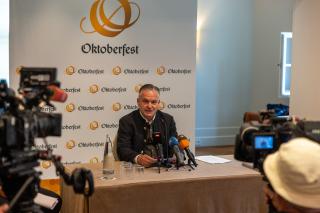
The Head of Oktoberfest Dr. Christian Scharpf, head of the Department of Labor and Economic Development, drew a positive conclusion regarding the security measures, which were intensified this year:
The enhanced security concept for the 2026 Oktoberfest has proved effective in practice. The new security centre, improved video surveillance and crowd spotting made it possible to monitor visitor flows even more closely and to intervene early in the event of crowds gathering. The checks at the entrances were accepted by guests without any problems. On the middle Saturday and the third Saturday, the two main entrances were temporarily closed, and guests were redirected to the side entrances, accompanied by appeals on our social-media channels and announcements on the festival grounds On the final Saturday, the entrance at the Bavaria statue also had to be temporarily closed.
The closures, which lasted around 30 minutes, brought about a rapid and noticeable easing of the situation on the festival grounds.
The newly installed cameras, the AI technology used and the optimised communication channels between the festival management, police, fire brigade, emergency services and security services proved to be important components. In addition, our visitor-management campaign, ‘How to Wiesn’, including the appeal to visit the Wiesn on weekdays, was highly successful. This is demonstrated by the increased weekday visitor numbers (+25 per cent).”
Food and Drink at Plus
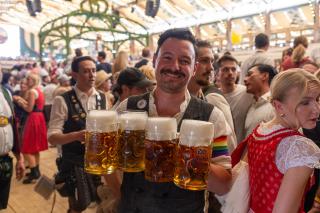
According to the Association of Munich Breweries, consumption of festival beer rose by 2.7 per cent to around 6.7 million litres (2025: 6.5 million). Demand for alcohol-free beer increased by 10.7 per cent and for wheat beer by 12.6 per cent. Sales of non-alcoholic drinks rose by 10 per cent. The sour Radler (a mix of beer and sparkling water) also met with great approval.
The major Oktoberfest landlords reported an increase in food sales of two to three per cent. The classic roast chicken is back in fashion after consumption had declined in recent years.
The landladies and landlords praised the very pleasant atmosphere. The tents were only rarely completely full, while the beer gardens were busy right up to closing time. This was due to the fine weather and ensured pleasant movement between the tents, beer gardens and the festival grounds.
Revenue at the small Wiesn tents was at the same level as last year. Guests were more adventurous with vegetarian dishes than in previous years and ordered specialities other than the classic cheese spaetzle. Street sales were very good.
No Oktoberfest hit this year, but a newcomer
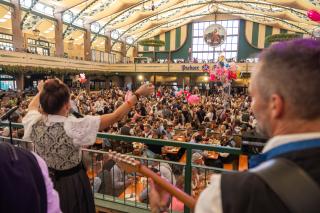
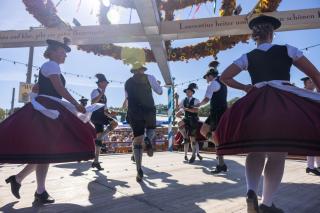
No single song really stood out as a hit. The children’s song “Gute Laune” by GroßstadtEngel, a new addition to the setlist, was among the audience’s absolute favorites alongside classics like “Hey Baby,” “Take Me Home, Country Roads,” and “Fürstenfeld.”
Street Sales and Souvenirs
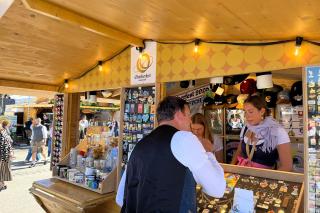
The lunchtime offerings at the street stalls were very well received. Overall, sales were on par with last year, while sales of Herzl and almonds saw an increase. The stall operators are satisfied. When buying souvenirs, guests pay close attention to quality. The rush for novelty hats is over, but traditional hats were in higher demand again.
Fairground operators are delighted to see so many families this year

The fairground operators also praised the cheerful and friendly atmosphere on the festival grounds. They were very satisfied with how the festival went, but noted that guests were more restrained in their spending and often simply enjoyed strolling around the festival grounds. The weekends were very well attended, and on Children’s Day in the second week, 57 per cent more guests came to the Wiesn than in the previous year (2026: 422,000).
That's what the authorities are reporting
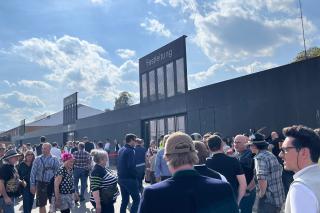
All security agencies praised the guests’ composure and agreed that the revised security plan had paid off. The announcements made at the festival grounds also provided clarity and were praised as an excellent means of managing the crowd.
Police and First Aid Station
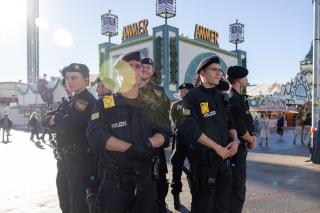
The police are very satisfied with how the Oktoberfest has gone so far. As expected, the number of police calls—around 1,600—is higher than last year’s level due to the sharp increase in the number of visitors. Drug offenses were the primary focus of the incidents. As of the date of this report (October 3), 607,000 euros in security deposits had been paid. The Aicher Ambulance Service reports a significant increase of 18.5 percent in patient numbers. This increase can also be attributed to the significantly higher number of festival-goers this year. As a result, emergency response activity during this Oktoberfest shifted increasingly to weekdays. The highest number of calls occurred on the middle Saturday. At just 1.1 percent, the rate of patients transported to surrounding Munich hospitals is encouragingly low.
Fire Department
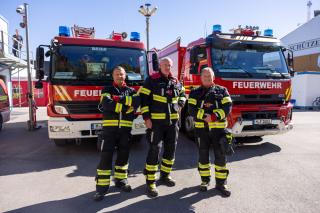
The fire department describes this year’s Oktoberfest as a quiet one. As of October 3, there have been 13 calls this year—the same as last year—most of which were for assistance. The largest incidents were the response to the fatal accident at the ride and the container fire on the first Sunday of the festival, September 27.
Security Services and Securitas

The tent and fairground operators supported by VESD member companies reported positive results. With plenty of sunshine and hardly any rain, the atmosphere remained relaxed throughout. Crowds in the tents were high from the start and were better distributed than last year: The tents filled up earlier in the day and, as a result, had to close less often. The public was friendly and cooperative toward security personnel, and safety measures were implemented to the usual extent. Eight large festival tents were set up as SafeNow zones, with association members drawing on their experiences from the first tent. Several member companies once again used body cameras. The results have been very positive: conflicts escalate less frequently, tense situations calm down more quickly, and incidents can be clearly documented.
Securitas looks back on a successful deployment at the 2026 Oktoberfest. Unfortunately, however, on the very first day of the festival, one of our employees was knocked over and injured during the “Run.”
Approximately 1,400 security personnel, with shifts of up to 730 people, were deployed across all known positions and operational areas. In particular, the comprehensive bag checks and random personal screenings using handheld metal detectors along all entrances to the festival grounds proved effective.
The patrol provided by Securitas along the hill behind the large festival tents remains a fundamental component of the security plan, supporting the police patrols operating on the grounds and the Aicher Ambulance service at this critical location. This enhanced security is intended in particular to increase women’s sense of safety, which is why the “Safe Oktoberfest for Women and Girls” initiative was once again incorporated into the training program this year.
Additional security posts on the festival grounds, in the visitor guidance area, helped alleviate congestion and prevent overcrowding during particularly busy times.
Protection of Minors

This year, the Youth Protection Unit assisted six lost children between the ages of zero and 13. In most cases, these were children who had become separated from their parents or guardians. All parties involved were reunited promptly.
Numerous parents and guardians were reminded of the ban on strollers after 6 p.m. as well as the rule that “children under 6 are not permitted in beer tents and beer gardens after 8 p.m.” Approximately 160 violations were recorded; most often, parents who were still out with strollers well past 6 p.m. were approached and asked to leave the festival grounds.
Twenty intoxicated teenagers were escorted home safely, as were five intoxicated parents and their children.
Significantly Fewer Lost Items and Jug Thefts
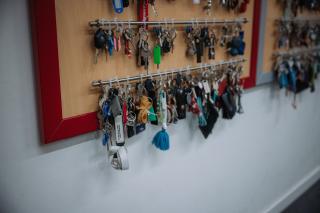
Starting this year, the Oktoberfest Lost and Found Office is located in the Transportation Center of the Deutsches Museum, about 400 meters as the crow flies from the Bavaria statue. As of Monday, October 5, an estimated 4,000 lost items had been registered. Compared to last year, this is expected to be 500 fewer lost items (-12 percent). The following figures are based on data as of October 2 and take into account the expected number of lost items over the next three days, which are expected to see high visitor turnout.
The most common lost items were
• 1,050 items of clothing (+/- 0 percent)
• 700 wallets (-15 percent)
• 450 ID cards (-15 percent)
• 250 bank cards (-20 percent)
• 400 cell phones/smartphones (-10 percent)
• 350 pairs of glasses (+15 percent)
• 220 keys (-30 percent)
• 180 bags, backpacks, and pouches (+15 percent)
• 20 umbrellas (-70 percent)
• 30 hats (-20 percent)
• 35 watches (-10 percent), including 25 smartwatches
• 15 high-end pieces of jewelry (+/- 0 percent)
• 12 pairs of shoes
It is estimated that around 850 lost items were returned to their owners. Among the more unusual items were a mouthguard, a wallet containing 500 euros and five credit cards, a wallet with 18 cards, a crutch, and a thick illustrated book about Tibet, which had not yet been claimed as of Friday, October 3. In the second week, a 1.80-meter-tall figure from a food stand was turned in to the lost and found office. Other unusual items included an accordion, a set of dentures, an insulin syringe, an Apple iPhone 18—just a few days after the model’s release—and a breathalyzer. Visitor numbers were noticeably down compared to previous years. It is estimated that about 30 percent fewer people came looking for lost items than in 2025.
Stewards collected around 105,000 beer mugs (2025: 112,000).
Food Safety Inspection and TÜV

The District Administration Office’s Food Safety Division was represented at this year’s Oktoberfest by eight food safety inspectors. On the festival grounds, including the Oidn Wiesn, 396 establishments were subject to regular inspections by the Food Safety Division. Inspections of the kitchens in the festival tents took place two days before the Wiesn opened. In total, the Food Safety Division conducted 1,158 inspections on the festival grounds and collected samples of food and consumer goods, including beer and prepared meals.
The 15 complaints received from consumers were investigated immediately. Minor deficiencies regarding operational and product hygiene, as well as the businesses’ own internal controls, were usually rectified immediately in the presence of the inspectors. It should be noted that the food establishments at Oktoberfest maintain high hygiene standards.
From a safety perspective, the Wiesn has been largely uneventful so far. Visitor numbers at the amusement rides were slightly higher than last year. The tents and amusement rides are repeatedly inspected on a spot-check basis, in collaboration with TÜV, to ensure compliance with operating regulations. No significant violations have been identified so far. Reports of injuries are significantly lower than in previous years. There was no evidence of negligence on the part of the operators.
Noise Levels in the Tents
The Department of Climate and Environmental Protection once again conducted inspections of sound systems at large food and beverage establishments and at the Oidn Wiesn this year. In summary, from the RKU’s perspective, this year’s Oktoberfest went smoothly and without any notable incidents.
Munich Street Cleaning and Abfallwirtschaftsbetrieb München (AWM)
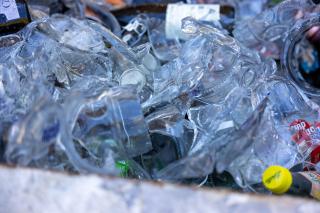
The 2026 Oktoberfest once again required extensive efforts by the Department of Public Works’ street cleaning division. In addition to the special shifts during the Einzug der Festwirte und Brauereien (arrival of the Wiesn vendors) and the Trachten- und Schützenzug (traditional costume parade), operations were in full swing every night starting around 2:00 a.m. By 8:00 a.m. sharp, the entire festival grounds were once again in pristine condition. A total of 92 metric tons of trash (2025: 93 metric tons) were swept up and hauled away this year; water consumption for cleaning the traffic areas on the festival grounds totaled approximately 1,800 cubic meters. Up to 30 employees and a large array of technical equipment were on duty each night. Following the cleanup of the festival grounds, the surrounding streets were cleaned daily. This generated approximately 54 metric tons of trash (2025: 55 metric tons). During the day as well, an electric vehicle and a small sweeper were used on the festival grounds, as long as visitor traffic permitted.
The Munich Waste Management Authority expects a total volume of approximately 1,015 metric tons of trash to be generated during the 16 days of the Oktoberfest. The projected total volume breaks down as follows:
• 804 metric tons of residual waste for thermal recycling
• 84 metric tons of paper, cardboard, and paperboard
• 127 metric tons of mixed broken glass
An estimated 1,200 container emptying operations were carried out. These operations encompassed various container and bin systems deployed on the festival grounds for the respective waste and recyclable material categories.
A slight decrease in energy and water consumption
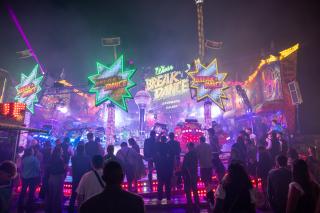
Electricity consumption of approximately 2.65 million kWh—calculated over 16 days—is about 7 percent lower than in 2025. The highest daily peak was recorded on Friday, September 24, at 7:15 p.m., at 11,471 kW. Water consumption after 16 days stands at around 83,800 m³, which is approximately 3.4 percent higher than during Oktoberfest 2025. Gas consumption after 16 days of Oktoberfest stands at approximately 129,651 m³, which is about 10.3 percent lower than the consumption in 2025. Total consumption at the drinking water fountains after 16 days is around 198 cubic meters, representing an increase of approximately 52.3 percent. (2025: 130 m³). The drinking water fountain with the highest consumption is located behind the Augustiner Festhalle, with a consumption of around 35 m³.
MVG and Deutsche Bahn
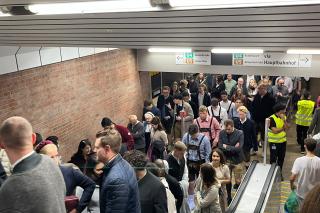
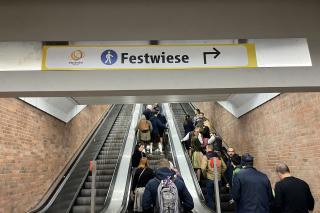
The Münchner Verkehrsgesellschaft (MVG) and Deutsche Bahn (DB) are once again reporting high passenger volumes. Many visitors arrived by S-Bahn and made their way to the festival grounds via the “Wiesn Station” at Hackerbrücke or the Central Station. For the MVG, the Theresienwiese subway station remained the busiest arrival and departure point for Oktoberfest visitors. Passenger service ran largely smoothly, thanks to the expanded transit offerings—as is customary during Oktoberfest—and the extensive deployment of staff. The MVG deployed more than 230 additional employees each day. Buses and trains made approximately 9,000 additional trips during the Wiesn. Deutsche Bahn ensured smooth travel to and from the festival with more than 500 additional or extended S-Bahn trips.