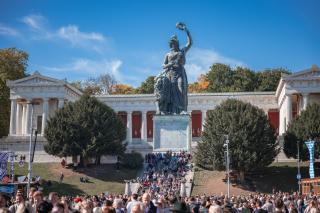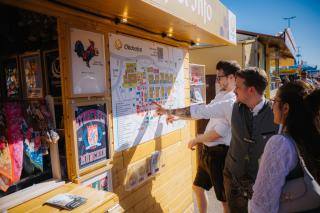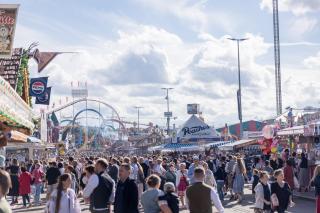


More than 8,600 participants paraded through downtown to the Wiesn in glorious weather
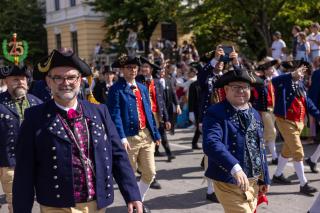
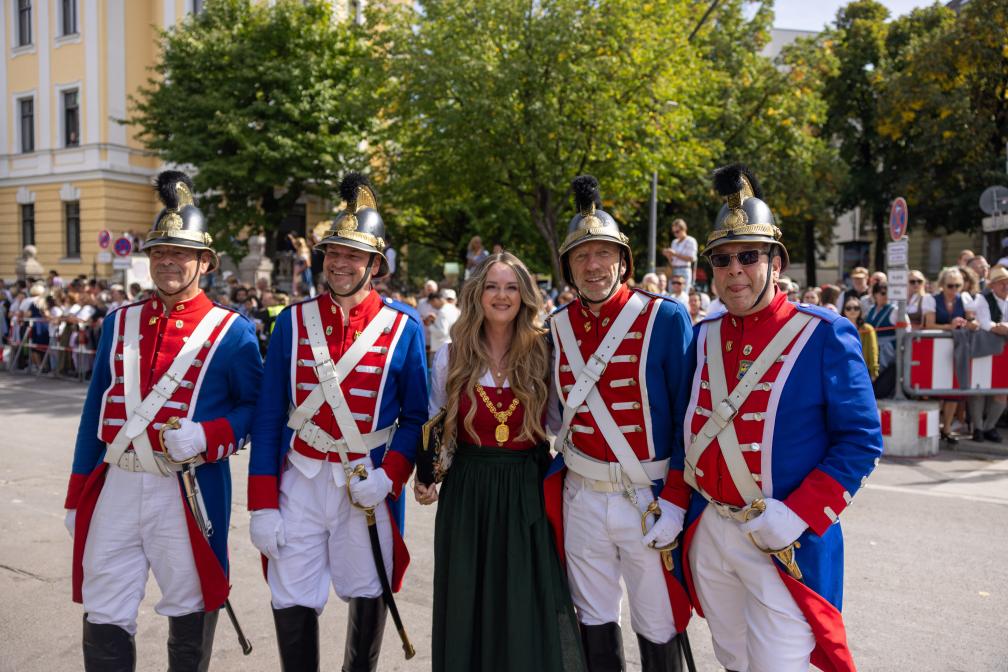
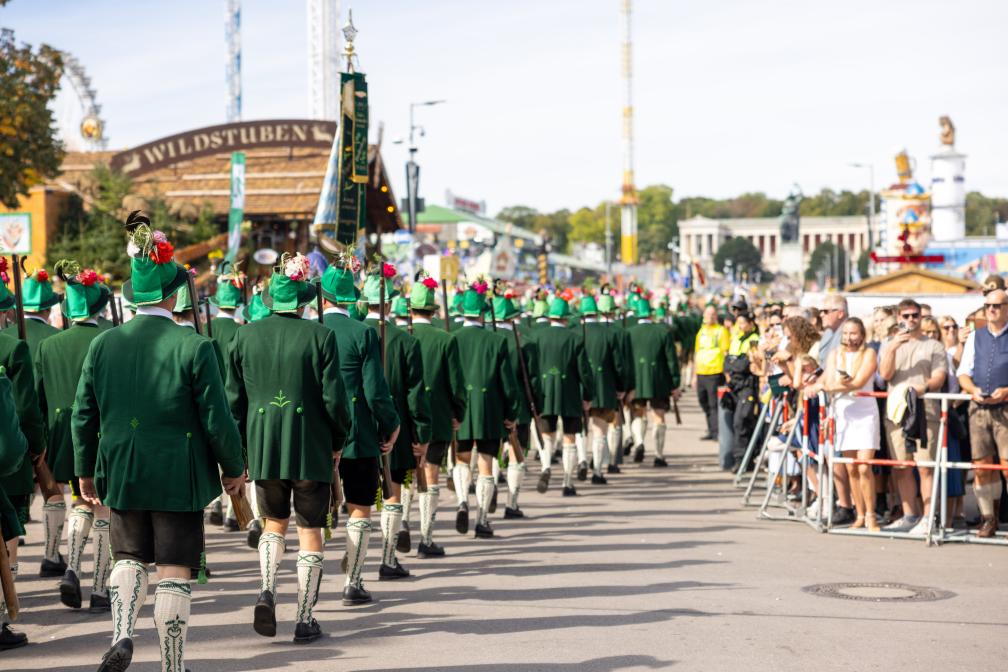
The Trachten- und Schützenzug (Traditional Costume and Riflemen’s Parade) is far more than just a colorful spectacle: It embodies Bavarian culture, living customs, and a vibrant tradition that captivates people anew every year. Approximately 8,600 participants in 50 parade groups march from the Max II Monument through downtown Munich to the Theresienwiese.
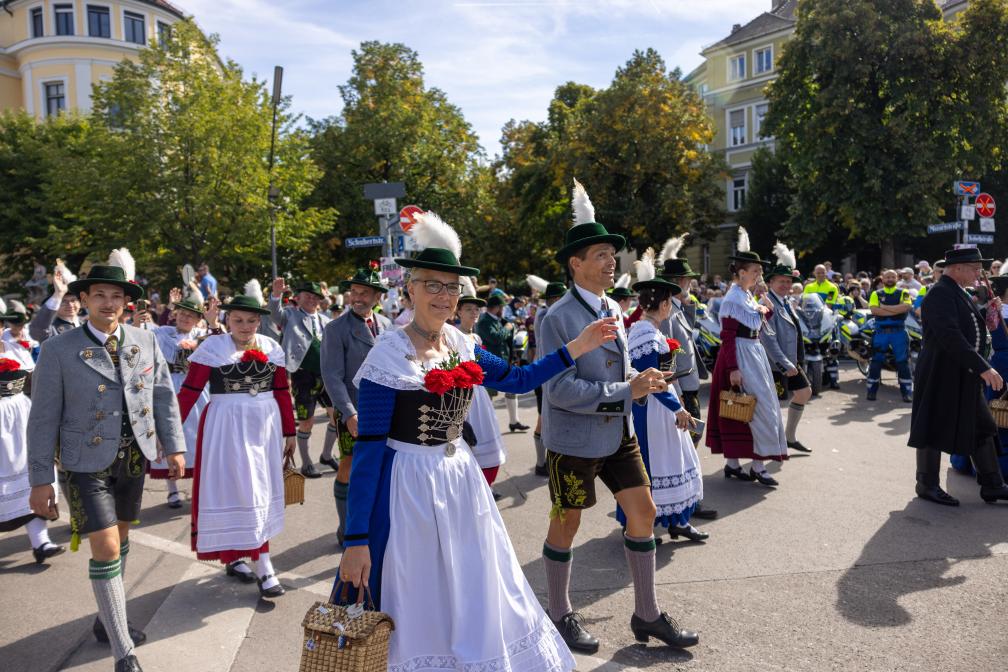
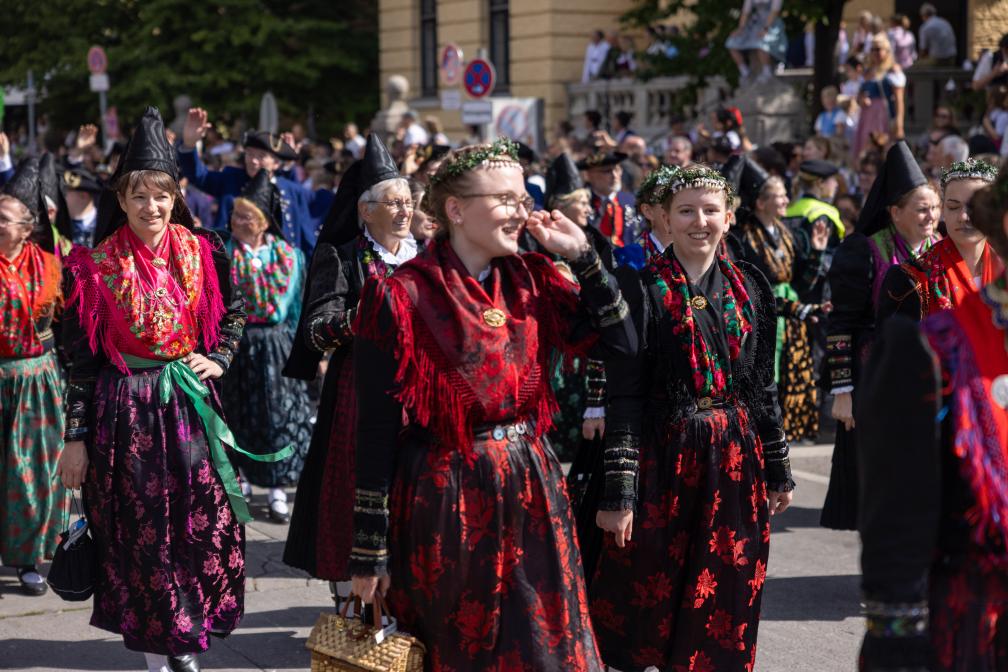
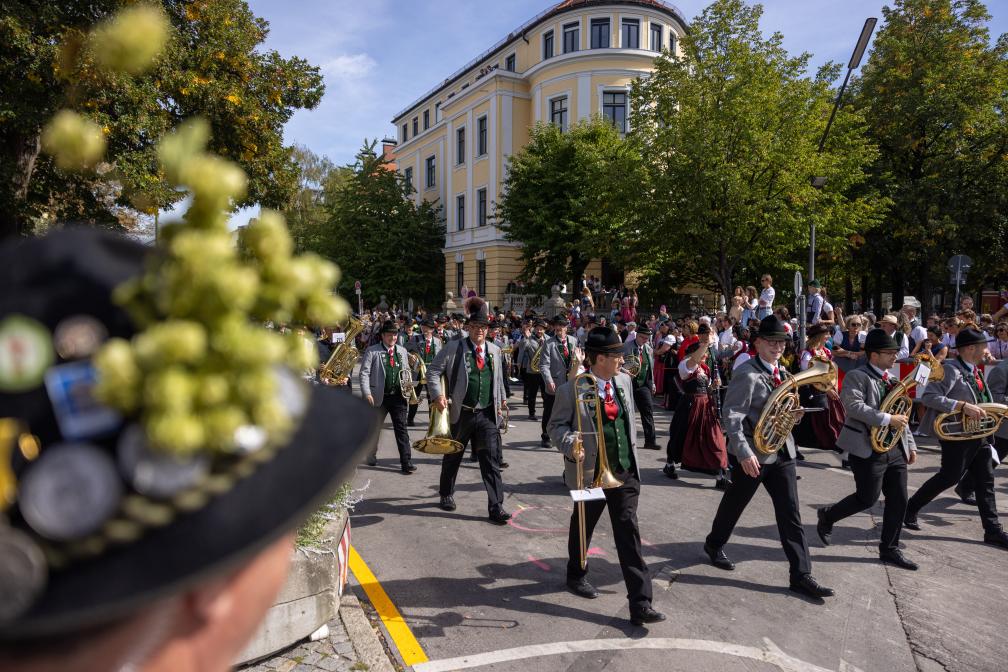
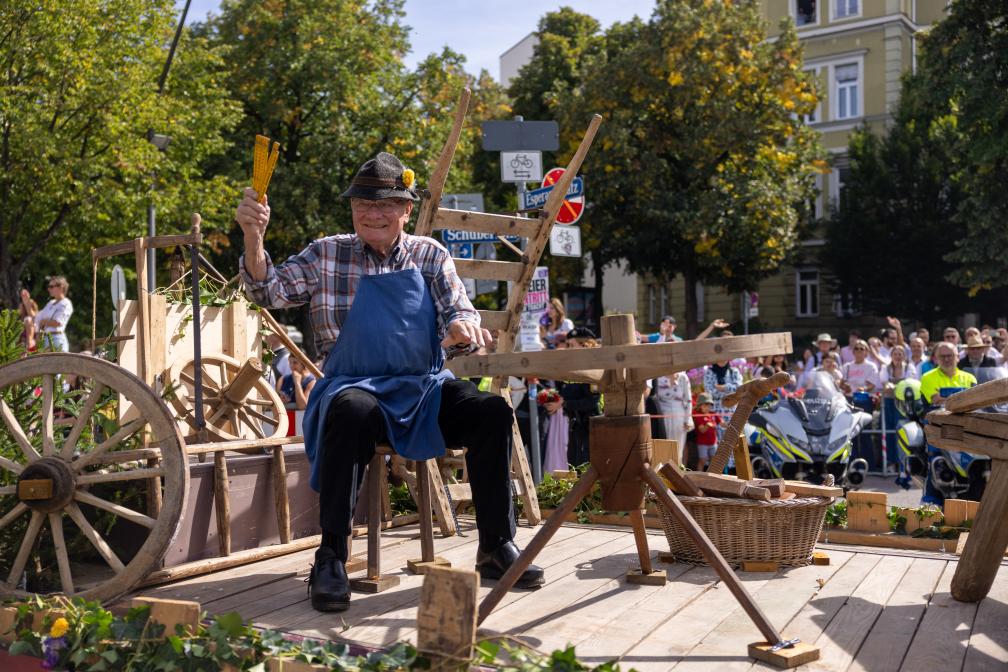
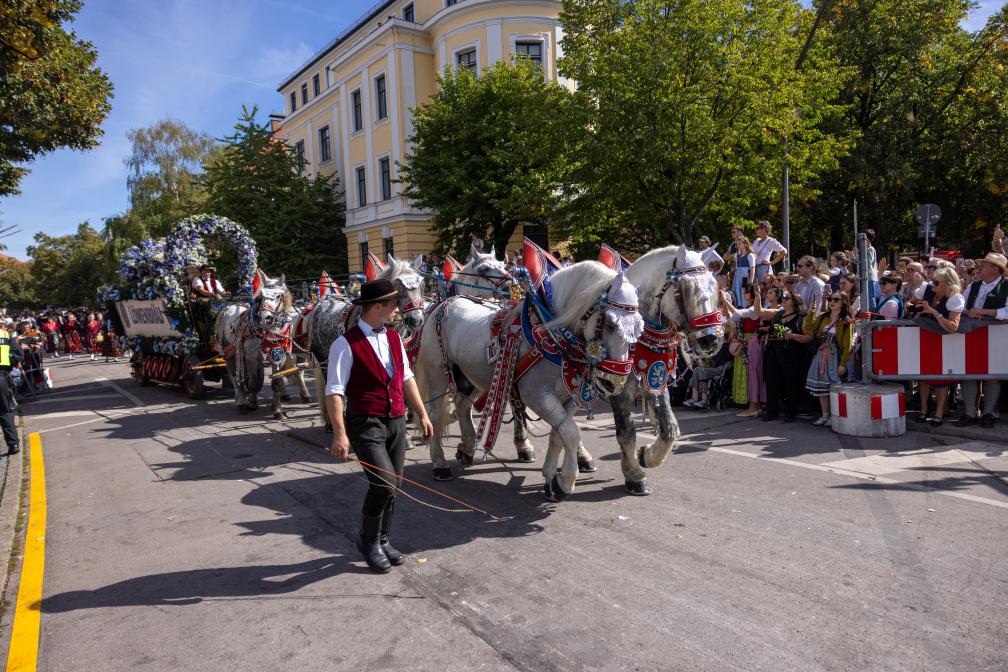
Magnificent traditional costumes, historic carriages, marching bands, and traditional folk dances bring to life the cultural diversity of Bavaria and its regions. Numerous spectators line the route, swept up by the unique blend of customs, music, and Munich’s zest for life.
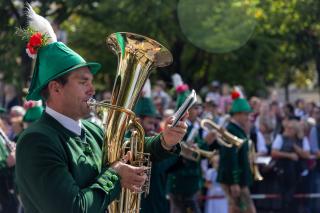
The Trachten- und Schützenzug: Tradition, Music, and Munich's Joy of Life
At the head of the traditional costume and marksmen’s procession, the Munich Mounted Police opens the parade. The mounted unit, founded in 1898 by Prince Regent Luitpold of Bavaria, leads the procession with six horses and, with four additional horses, brings up the rear.
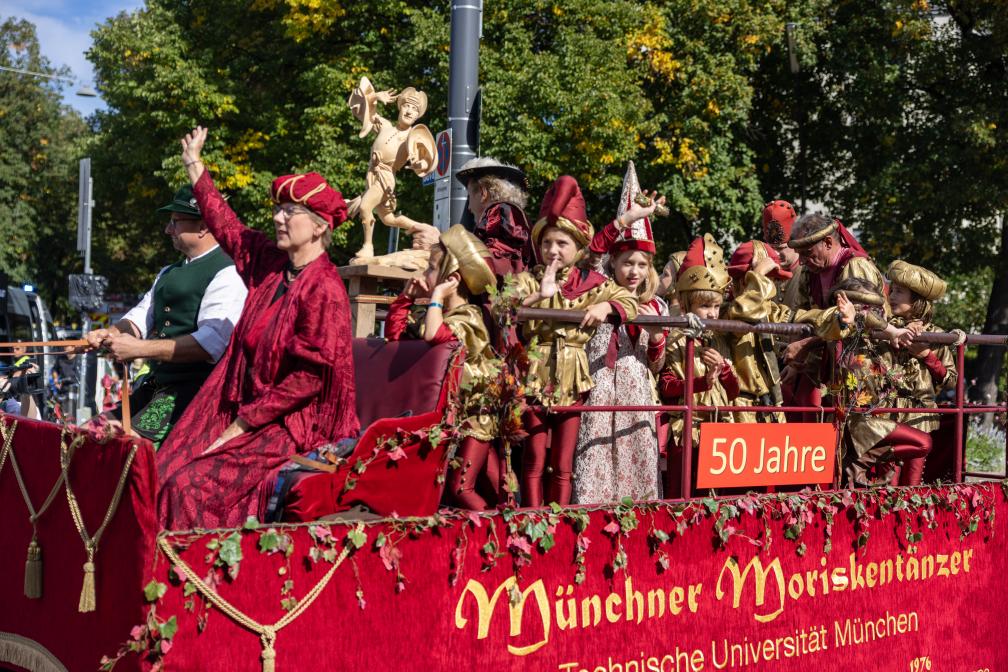
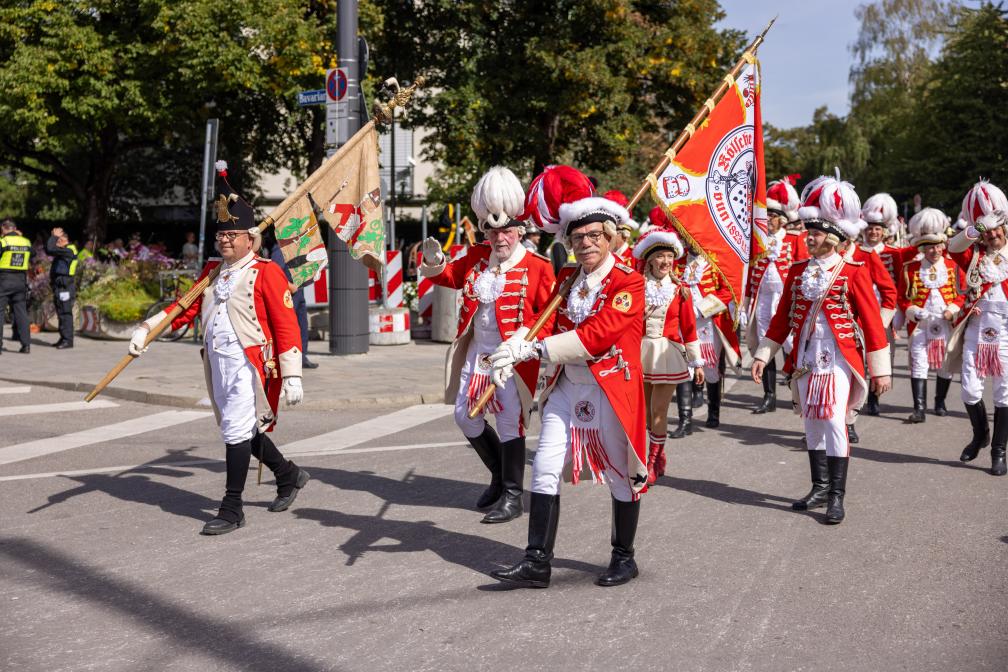
The Münchner Kindl, the state capital’s emblem and heraldic figure, is portrayed this year by Sina Hochreiter. Riding a horse provided by the Spaten Brewery, she leads the parade, followed by the Munich Moorish dancers from the Technical University of Munich, the puppet theater, and a float from Circus Crone. Making their debut this year was the group “Kölsche Funke rut-wieß von 1823” from Cologne. The oldest traditional corps of the Cologne Carnival was founded in 1823. As a parody of Cologne’s former city soldiers, it adopted their uniforms in the city colors of red and white and has been spreading humor, tradition, and the Cologne way of life for over 200 years.
In addition to numerous marching bands, brass bands, and traditional groups from Bavaria, the parade also featured the six magnificent horse-drawn carriages of the Munich Oktoberfest breweries. Bavaria’s Minister-President Dr. Markus Söder and his wife, Karin Baumüller-Söder, also took part in the parade in their own carriage, as is tradition.
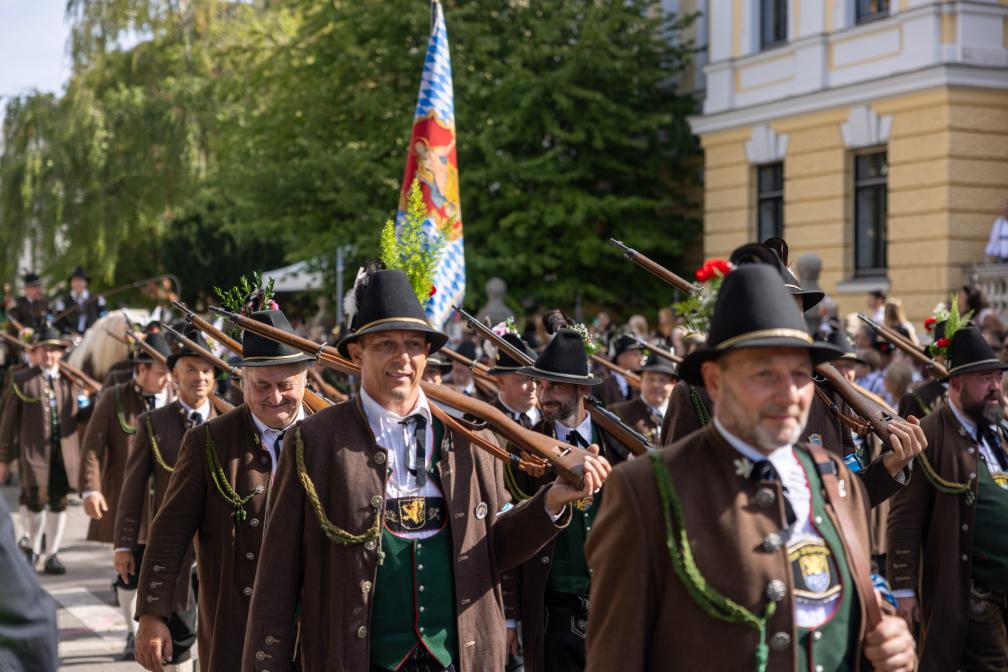
Numerous marching bands, horsemen, magnificent horse-drawn carriages, and marksmen added to the splendor of the parade. Together, they presented a striking picture of Bavarian tradition, musical diversity, and a vibrant sense of community, which was witnessed by several thousand spectators lining the route of the parade through downtown Munich.
Scenes from the Trachten- und Schützenzug
A sunny and relaxing start
From the festival organizers’ perspective, it had been the perfect first weekend through Sunday afternoon. The festival grounds were well-attended but never overcrowded. On their first day on duty, the police reported significantly fewer crimes, and the medical service treated fewer patients than on the first day of the previous year.
About the History of the Trachten- und Schützenzug
The roots of the Trachten und Schützenzug date back to 1835. A magnificent parade was held for the first time on the occasion of the silver wedding anniversary of King Ludwig I and Therese of Bavaria, as well as the 25th anniversary of the Oktoberfest. With 86 floats from the Isar District—now Upper Bavaria—it was the highlight of the celebrations. Everyday scenes from the kingdom were depicted in what were known as “living pictures.” More than 1,000 participants took part in this first traditional costume and riflemen’s parade.
In the decades that followed, parades were held on other special occasions, including in 1842, 1895, 1910, and 1935. Since 1948, the traditional costume and marksmen’s parade has taken place annually and has been an integral part of Oktoberfest ever since.
Since 1956, the organization of this time-honored parade has been in the hands of Festring München e. V., which has been committed to nurturing and preserving this special part of Bavarian culture ever since.