

Let's go to Oktoberfest 2026!
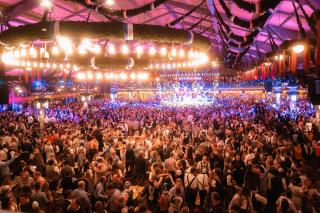
From September 19 to October 4, the world’s largest folk festival will take place at the Theresienwiese. This year’s 191st Oktoberfest will feature 16 days of celebrations. The festivities will kick off with the traditional tapping of the first keg by Mayor Dominik Krause on September 19 at 12:00 p.m. in the Festhalle Schottenhamel.
The Festival Grounds and Applications
The festival grounds cover an area of 34.5 hectares. For the 2026 Oktoberfest, 954 businesses with their own stalls applied. This year, 478 businesses were approved, including 36 food and beverage vendors, 243 amusement ride operators, 182 market vendors, and several service providers. At the Oidn Wiesn, 109 businesses applied, and 45 were approved, including 4 food and beverage vendors and 41 carnival attractions.
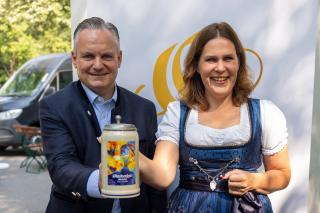
This is the official 2026 Oktoberfest™ collector's mug
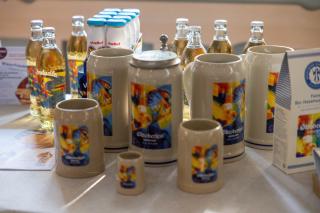
The mug is also available with a handcrafted pewter lid. Each year, the lid honors a different Munich personality associated with Oktoberfest. This year, it is Betty Feldl of the Teufelsrad. After the death of her husband, Rudolf Feldl, in 1970, she took over management of the historic Teufelsrad and ran the ride until her death in 2002. At a time when many traditional rides were being modernized or discontinued, she preserved the Teufelsrad in its original form as the only surviving example of its kind.
The mug expands the series of collector’s mugs that began in 1978.
The Rastal company in Höhr-Grenzhausen/Westerwald manufactures it from gray stoneware (Keferloher) in a strictly limited edition.
The 2026 Oktoberfest™ collector’s mug costs 34.90 euros, or 54.90 euros with a pewter lid, and is available at the official shop, as well as at souvenir stands on the festival grounds and at the Tourist Information office in City Hall on Marienplatz. The mug is also included in the “Wiesn Package” from Munich Tourism.
“A Liad für d' Wiesn 2026” Music Contest
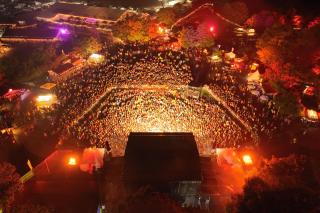
The music competition organized by the Department of Labor and Economic Development took place for the second time this year in collaboration with its well-known partners, and—new this year—with the support of Festring München e.V. Seven of the 122 songs submitted advanced to the online voting round. The song with the most votes will be performed live on August 1 at the Brass Wiesn Festival. Among those who participated in the public vote, 80 tickets to the Wiesn—including two beer vouchers and a roast chicken voucher from the Association of Munich Breweries — were raffled off. The winning act will receive extensive promotion for their song. Last year’s winner, Michael Fenzl, serves as the official ambassador.
New Features at Oktoberfest 2026
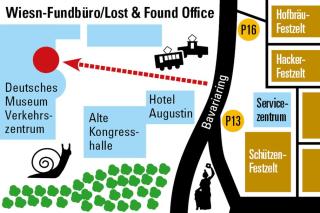
Relocation of the Lost and Found Office
The lost and found office at the Wiesn has moved. From now on, lost items can be picked up at the Deutsches Museum Verkehrszentrum on Theresienhöhe. The entrance is located to the right of the museum’s main entrance, within walking distance of the festival grounds. The lost and found office is open daily from 1:00 p.m. to 8:00 p.m. Items found in tents, on rides, or on the festival grounds are delivered no earlier than the day after they are found. It is therefore recommended to wait one or two days before visiting the lost and found office.
Improved Visitor Flow Management
The Kreisverwaltungsreferat (District Administration Office) has made the space previously occupied by the Lost and Found Office in the Service Center available for the newly established Coordination Center. Here, and in the security room, modern surveillance management and visitor flow control will take place in the future, and the flow of information between all participating security agencies and the event organizers will be ensured.
These measures will ensure that overcrowding situations are detected and resolved in a timely manner. The city has also developed the “How to Wiesn” campaign, which was launched in May 2026. The messages to guests are clear: The Oktoberfest is at its best during the week; instead of waiting in line in front of the tents, visitors should visit Schaustellerstraße or the Oide Wiesn; and the Wiesn has more than one entrance.
Greater Accessibility
Initiative „Hidden Disabilities Sunflower“
The goal of the Sunflower Initiative is to create greater visibility, understanding, and support in everyday life for people with invisible disabilities, such as autism, anxiety disorders, chronic illnesses, hearing impairments, or cognitive impairments. The internationally recognized symbol—a yellow sunflower on a green background—indicates that those affected may need additional assistance.
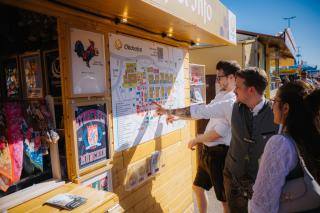
The lanyards are available at the Tourist Information office on Marienplatz and, for the first time this year, at the city’s official information booths on the festival grounds and in the museum tent at the Oidn Wiesn. The staff at Munich Tourism have received special training. In addition, security personnel on the grounds, the medical service, and the police have been informed; likewise, all restaurant owners, carnival operators, and vendors have been asked to raise awareness among their staff as well.
Reserve wheelchairs online
Wheelchairs can now also be reserved online. The luggage storage areas at the Hans-Fischer-Straße entrances on the southern part of the Theresienwiese (G 10) and near the main entrance (G1) each provide two wheelchairs free of charge to guests with limited mobility in exchange for a photo ID as a deposit. Wheelchairs can be reserved online at gepaeckannahme.de or by phone at +49 176 43831566. You can also check availability for your desired date on the website.
Accessible Festival Grounds
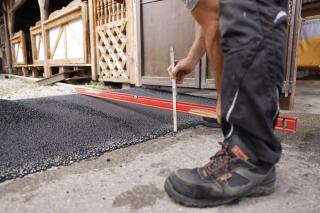
The organizer, the Department of Labor and Economic Development, is consistently continuing the gradual accessibility upgrades to the festival streets: Following Street 1 (2024) and Streets 2 and 3 (2025), Street 4 was redesigned this year, and the infrastructure was modernized at the same time.
Here's what's happening with the operators
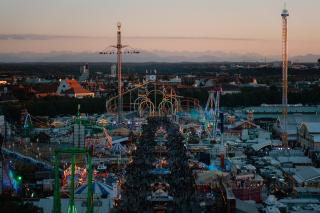
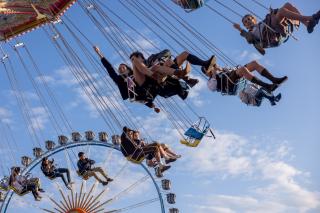
The culture of fairground performers at folk festivals in Germany was inscribed on the UNESCO List of Intangible Cultural Heritage in 2026. It embodies the interplay of amusement rides, games, and mobile food vendors, which also characterizes the Oktoberfest. The fairground operators combine traditional craftsmanship, technical expertise, and living family traditions, transforming the folk festivals into vibrant places of encounter, entertainment, and participation for all segments of the population.
These rides are new this year
- Else Schäfer’s “Shake & Roll” ride has been approved for the first time this year. It is an evolution of the classic “Break Dance” ride. Unlike its predecessor, the gondolas are not rigidly mounted but can flip freely. Centrifugal forces cause the gondolas to sway and perform complete loops—not controlled by a motor, but solely through the physics of motion. This makes every ride unique, as the number and intensity of the loops depend on the weight of the passengers and the operator’s driving style (Matthias-Pschorr-Straße 52).
- Franz Xaver Kollmann’s “Fisherman’s” attraction and amusement ride is also making its debut at Oktoberfest. The attraction is a new structure completed in 2026 and offers fun, action, and water adventures across three floors. Thematically, visitors find themselves in a fishing village designed not only with smooth metal panels but also with numerous polyester add-ons to create impressive 3-D effects. The experience is complemented by a 15-meter-long obstacle course in front of the attraction itself (Street 3 East/5).
- The “Chaos Pendel” by Willi Ottens Jr. will also make its debut at Oktoberfest in 2026. The ride whips its guests through the air at heights of up to 42 meters and speeds of up to 80 km/h. Driven by a rotating arm that itself hangs from a swiveling propeller, the two gondolas spin around their own axes. The triple-coupled motion creates ever-changing ride paths (Street 3 East/9).
Notable Anniversaries
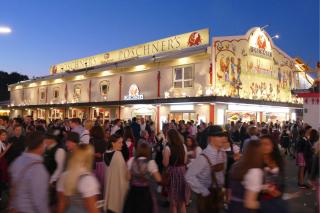
- 90 Years of the Willenborg Family
The Willenborg family has been in the fairground business for 90 years now. Today, the business is run by the third generation of the family. Before Heinrich Willenborg became the first German carnival operator to have a steel Ferris wheel built and set it up at the Wiesn in 1960, the family operated various attractions—at times as many as four simultaneously—including bumper cars, a haunted house, the “Devil’s Carriage” (a precursor to the “Wild Mouse”), and walking attractions. The fairground family’s iconic 50-meter Ferris wheel has been a fixture at the Oktoberfest (Street 5) since 1979. - 100 Years of the Hühnerbraterei Poschner
Since 1926, the Poschner Roasted Chicken Restaurant has been treating its guests to chicken and duck fresh off the grill. It stands for quality, craftsmanship, and Bavarian tavern culture at the Theresienwiese. To mark its anniversary, Poschner is showcasing its tried-and-true family-friendly offerings. Both sustainability and inclusion shape the actions of this long-standing business. Poschner was the first Bavarian festival tent to be awarded the Free State of Bavaria’s “Barrier-Free Bavaria” seal (Wirtsbudenstraße 47).
What's New at Restaurants and Beer Tents
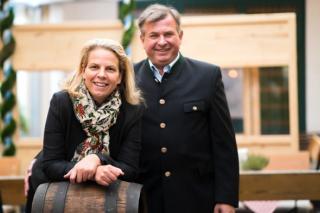
- Bartls Flößerstadl
Klaus Bartl will be taking over the “Münchner Stubn” spot at the 2026 Oktoberfest on short notice. The longtime manager of the Thalkirchen campground will be represented at the Theresienwiese with his tent, “Bartls Flößerstadl.” In his tent, Klaus Bartl aims to highlight the history and significance of rafting for Munich and the region and to integrate the rafting tradition into the Oktoberfest experience. The menu will feature high-quality regional products with an emphasis on organic and Fair Trade ingredients. The tent will seat 398 guests (Wirtsbudenstraße 26). - Bodos Cafézelt
For Oktoberfest 2026, festival host Otto Lindinger is replacing the old aluminum tent from Bodo’s Cafézelt & Cocktailbar with a completely new festival tent featuring a gallery, built using sustainable wood construction methods. The bar inside the tent has been enlarged and moved to the gallery. The new, covered street-side area invites visitors to stop by with seating, a portafilter coffee machine, and live baking demonstrations. The number of guest seats remains unchanged at 587 (Street 2). - New Hosts at the Paulaner Festzelt
Following their stint at the Schützenlisl tent at the Oidn Wiesn, Christine and Lorenz Stiftl are taking over the Paulaner Festzelt as the new hosts of one of the large brewery festival tents at Oktoberfest (Wirtsbudenstraße 59).
Oide Wiesn: New Vendors and an Exhibition
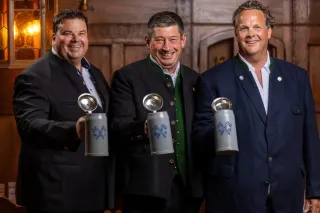
- New Owners for the Schützenlisl
Michael Bietsch, who will remain the operator and host of the Historic Bowling Alley at the Oidn Wiesn through 2025, joins forces with the managing directors of the Munich Soup Kitchen, Florian Fendt and Manfred Kneifel, to form the new trio of hosts at the Schützenlisl Folk Singer Tent. The traditional Old Munich character of the Folk Singer Tent is not expected to change significantly: Traudi Siferlinger will remain the musical director. New initiatives in hospitality, quality, and programming are intended to gently evolve the tent. There is one change regarding the beer—in the future, Hacker Pschorr will be served from a wooden barrel (location: Oide Wiesn 38). - New Operator of the Historischen Kegelbahn
Now that the current operator of the Historic Bowling Alley 2026 is set to become the host of the Schützenlisl festival tent, Sabine Erhard will take over the bowling alley and the attached Kugel-Bar (Oide Wiesn 3). - „Jedes Bild ein Treffer! Fotografie auf dem Jahrmarkt“ (“Every Shot's a Hit! Photography at the Fair” )
This year, the exhibition in the museum tent will be expanded to include a new chapter: the Oktoberfest postcard as a popular mass medium at the turn of the century. The exhibition traces the development of fairground photography from the 19th century to the present day. It illustrates how photography emerged as both an attraction and a souvenir and how it evolved technically.
Historical artifacts and photographic equipment illustrate the practices of the past, while visitors can have retro-style novelty photos taken by fairground showman Chris Doherty. The exhibition was created in collaboration with the Munich City Museum and the Historical Society of Bavarian Fairground Showmen (Historische Gesellschaft Bayerischer Schausteller e.V.).
What else is new?
- Drinking Water Well
There are now ten fountains with free drinking water on the grounds. These are located, among other places, at the Oidn Wiesn, near the restroom facilities, at the entrance to the Familienplatzl, and at the entrance on Esperantoplatz. There is also a fountain near the Fahrenschon family’s wheat beer carousel (Matthias-Pschorr-Straße 6). Also newly opened in 2025 were the drinking water fountains at St.-Pauls-Platz and at the new restroom facilities at the Theresienwiese subway station. - Cashless Payments
Every year, the number of businesses and rides where guests can pay cashless continues to grow. By now, a good half of all booths and attractions offer card payments. - Extension of Music Class Hours
Starting in 2026, large festival tents will be allowed to play music on weekdays starting at 11 a.m. and on weekends starting at 10 a.m., with the exception of opening day. However, only traditional brass band music may be played until noon. This is intended to spread out the flow of visitors.